n8n AI Automations: 7 Powerful AI Agent Workflows Explained
Your team closed 47 deals last quarter. Your competitor closed 140 with the same headcount. The difference? They automated their AI workflows six months ago while you're still manually copying data be…
Your team closed 47 deals last quarter. Your competitor closed 140 with the same headcount. The difference? They automated their AI workflows six months ago while you're still manually copying data between tools and waiting three days for someone to write that customer analysis report. This isn't about working harder—it's about the fundamental shift happening right now where AI automation separates winning teams from overwhelmed ones.
Why AI Automation Is No Longer Optional for Modern Teams
Manual work doesn't scale. Your sales team spends 4 hours daily on data entry. Your support team drowns in repetitive tickets. Your marketing team can't personalize at the speed customers expect.
Meanwhile, AI agents can process 10,000 customer inquiries overnight, score leads with 89% accuracy, and generate personalized content in 47 languages. The gap between teams using AI automation and those still doing everything manually grows wider every single week. You're not competing against other humans anymore—you're competing against humans augmented by AI systems that never sleep.
The companies winning right now didn't hire more people. They built AI agents that handle the repetitive work while humans focus on strategy and relationships.
The Real Problem: Building AI Agents Shouldn't Require a PhD in Computer Science
You know AI automation would transform your operations. You've read the case studies and seen the ROI projections. But when you actually try to implement it, you hit a wall of technical complexity that stops most teams dead.
Your developers are already backlogged for six months. The AI specialists you tried to hire wanted $200K+ salaries. The "simple" chatbot project turned into a three-month engineering nightmare involving APIs, webhooks, error handling, and infrastructure you don't fully understand.
This technical barrier isn't just slowing you down—it's the reason 73% of AI projects never make it past the pilot phase.
Why Traditional Automation Tools Fall Short for AI Workflows
Zapier and IFTTT work great for simple trigger-action sequences. Send an email when a form submits. Post to Slack when someone tweets. These tools revolutionized basic automation a decade ago.
But AI agents require conditional logic, multi-step reasoning, context management, and dynamic decision trees. Traditional automation platforms can't handle an AI agent that needs to analyze sentiment, query three different databases, make a judgment call, and then route the response through different channels based on confidence scores. They weren't built for workflows where the AI itself makes decisions mid-process.
Your AI automation needs branching logic, error recovery, data transformation, and the ability to chain multiple AI models together. Legacy platforms force you into rigid linear flows that break the moment you need actual intelligence in your automation.
The Code-Heavy Trap: When LangGraph and Custom Solutions Slow You Down
LangGraph gives you unlimited power to build complex AI agent systems. You can architect exactly what you want with complete control. But that power comes at a brutal cost.
Your first "simple" agent takes 40 hours to build. Every edge case requires more code. Maintenance becomes a full-time job because three months later, nobody remembers why that specific error handler exists. You're spending more time debugging Python than actually solving business problems.
Custom solutions create technical debt faster than most teams can pay it down. One developer leaves and suddenly nobody can modify the customer support agent. The marketing team wants to add one feature and it requires a two-week sprint. The speed advantage of AI automation disappears when you need a developer for every workflow change.
What Makes n8n the Visual Powerhouse for AI Workflow Automation
n8n bridges the gap between no-code simplicity and developer-grade power. You build AI workflows visually by connecting nodes on a canvas, but underneath you get the full flexibility of code when you need it. No artificial limitations, no black boxes, no fighting against the platform.
The difference shows up immediately. Tasks that took 40 hours in LangGraph take 2 hours in n8n. Non-technical team members can build and modify workflows without waiting for developers. You move from concept to deployed AI agent in the same afternoon instead of the same quarter.
This isn't about dumbing down AI automation—it's about removing the friction that stops teams from shipping.
The Visual Workflow Builder That Thinks Like a Developer
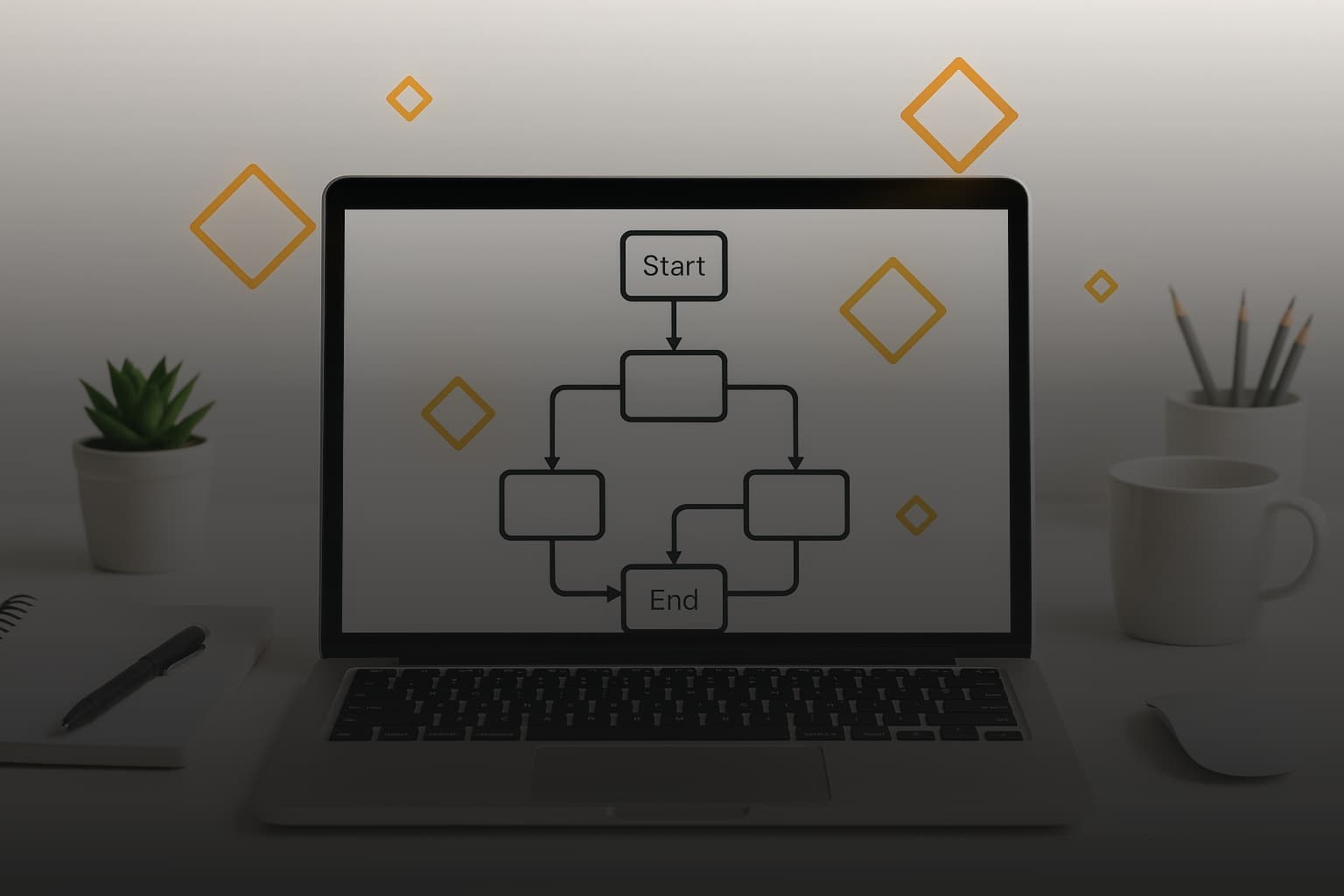
Each node on the n8n canvas represents a discrete action: call an API, run an AI model, transform data, make a decision, send a notification. You drag nodes onto the canvas and connect them with lines that show exactly how data flows through your automation. What you see is what executes.
But here's where n8n separates itself from toy automation tools: every node exposes the full underlying functionality. You can write JavaScript expressions directly in any field. You can access the complete data structure from previous steps. You can implement complex conditional logic without hitting platform limitations.
The visual interface handles 80% of your workflow instantly. When you need the other 20%, you drop into code for that specific node while everything else stays visual. You're not choosing between power and speed—you get both.
500+ Integrations and 9500+ Templates: Your AI Automation Head Start
Building AI workflows from scratch wastes time solving problems someone already solved. n8n connects to over 500 applications out of the box—Slack, Salesforce, HubSpot, PostgreSQL, Google Sheets, OpenAI, Anthropic, and every major platform your team already uses. No custom API wrangling required for standard integrations.
The real accelerator is the 9500+ pre-built workflow templates. Need an AI agent that summarizes customer support tickets and routes urgent ones to humans? There's a template. Want automated lead scoring that combines CRM data with AI analysis? Template exists. Building a content generation pipeline that maintains brand voice? Already done.
You're not starting from a blank canvas—you're customizing battle-tested workflows that already work. For teams serious about scaling their AI automation without reinventing every wheel, 2000+ n8n AI Workflow Instant No-Code Automations provides premium multi-agent workflows that handle complex use cases right out of the box, complete with instant downloads and implementation guidance.
Multi-Agent Systems Without the Multi-Year Learning Curve
Single AI agents handle single tasks. Multi-agent systems coordinate multiple specialized agents that work together—one agent handles research, another writes content, a third fact-checks, and a supervisor agent orchestrates everything. This is where AI automation gets genuinely powerful.
Building multi-agent systems traditionally requires understanding agent communication protocols, state management, error propagation, and orchestration patterns. n8n makes this visual. You create separate workflow branches for each agent, use merge nodes to combine results, and implement supervisor logic with simple conditional nodes.
One workflow can spawn three parallel AI agents, collect their outputs, feed them to a decision-making agent, and route the final result to five different systems—all visible on one canvas. You understand the entire system at a glance instead of tracing through 800 lines of code.
Real-World AI Automation Workflows You Can Build Today
Theory doesn't matter. Results do. Here's what teams actually build with n8n AI automation and the specific business impact they see.
IT Operations: Self-Healing Systems and Intelligent Monitoring
Your monitoring tools generate 400 alerts per day. 380 of them are false positives or issues that resolve themselves. Your on-call engineers spend their nights triaging noise instead of sleeping.
An n8n AI workflow monitors your infrastructure, analyzes alert patterns using AI to distinguish real incidents from noise, automatically runs diagnostic scripts on affected systems, and attempts common fixes before paging a human. When it does escalate, the engineer receives a Slack message with the problem summary, attempted fixes, and relevant logs—not a cryptic alert code.
One team reduced middle-of-the-night pages by 67% and cut mean time to resolution from 45 minutes to 12 minutes. The AI agent handles the routine troubleshooting while humans focus on genuinely complex problems.
Sales & Marketing: From Lead Scoring to Content Generation at Scale
Your marketing team generates leads. Your sales team complains they're low quality. Everyone wastes time arguing about definitions instead of closing deals.
An n8n workflow captures every lead from your website, enriches it with data from Clearbit and LinkedIn, feeds the combined profile to an AI model trained on your historical won/lost deals, scores the lead with specific reasoning, and routes high-value prospects directly to your best closers with a personalized brief. Low-scoring leads get nurtured automatically with AI-generated content tailored to their specific pain points.
The same workflow generates personalized email sequences, creates custom landing page copy, and writes follow-up messages that reference specific details from previous conversations. Your team moves from "spray and pray" to genuine 1-to-1 personalization at scale. For teams looking to deploy sophisticated sales and marketing automation immediately, 2000+ n8n AI Workflow Instant No-Code Automations includes proven lead scoring, content generation, and pipeline management workflows that integrate directly with your existing tools.
HR & Customer Support: AI Agents That Actually Understand Context
Your support team receives 200 tickets daily. 60% are variations of the same 10 questions. Your team spends their time copy-pasting from a knowledge base instead of solving genuinely hard problems.
An n8n AI agent reads incoming support tickets, understands the actual question (not just keyword matching), searches your knowledge base and past ticket resolutions, generates a personalized response that addresses the specific situation, and either sends it directly to the customer or flags it for human review based on confidence scores. Complex issues get routed to specialists immediately with full context.
The same pattern works for HR onboarding. New employees ask questions in Slack. The AI agent understands context ("I can't access the VPN" means different things for remote vs. office workers), provides relevant answers, creates tickets for IT when needed, and learns from corrections. Your HR team handles exceptions instead of answering "where's the benefits portal" for the 40th time.
How Fast Can You Actually Deploy? A Reality Check
Most AI automation projects die in the pilot phase because expectations don't match reality. You need to know what's actually achievable in week one versus month three versus never.
Simple single-agent workflows go live in hours. Multi-agent systems with complex orchestration take days to weeks. Enterprise-grade deployments with security reviews and compliance requirements take months. Understanding this timeline prevents the disappointment that kills projects.
The Half-Hour Slack Agent: What's Possible Out of the Box
Ollie Scheers built a functional Slack agent in 30 minutes using n8n. Not a toy demo—an actual agent that responds to questions, performs actions, and integrates with company systems. His quote: "It blows my mind. I was hating on no-code tools my whole life, but n8n changed everything."
Here's what's realistic in your first hour: a Slack bot that answers common questions by querying your knowledge base, a lead notification system that enriches new signups with AI analysis, or an email responder that categorizes incoming messages and drafts replies. These aren't complete solutions, but they're functional workflows that provide immediate value.
The key is starting with a narrow, well-defined use case. Don't build a general-purpose AI assistant on day one. Build something that solves one specific problem completely, then expand from there.
Self-Hosted vs. Cloud: Choosing Your n8n Deployment Strategy
n8n offers both cloud-hosted and self-hosted deployment options. This matters more than most teams realize because it affects security, compliance, cost, and control.
Cloud deployment gets you running in 5 minutes with zero infrastructure management. You pay per workflow execution and n8n handles updates, scaling, and reliability. This works perfectly for most teams, especially early on when you're still figuring out your automation strategy.
Self-hosting gives you complete control over data, custom integrations with internal systems, and unlimited workflow executions for a fixed infrastructure cost. If you're handling sensitive customer data, operating in regulated industries, or running thousands of automations daily, self-hosting often makes more sense. The tradeoff is you're responsible for updates, security, and keeping everything running.
Building Your First AI Agent Workflow: The Strategic Approach
Don't start by trying to automate everything. Start by identifying the one workflow that wastes the most human time and has clear success criteria. Build that, measure the impact, then expand.
Identifying High-Impact Automation Opportunities in Your Stack
The best first automation projects share three characteristics: high repetition, clear rules, and measurable outcomes. Your support team answering the same question 50 times per week fits perfectly. Your CEO's "strategic thinking" doesn't.
Look for workflows where humans currently copy data between systems, where decisions follow predictable patterns, or where the same task gets repeated with minor variations. Track how much time your team spends on each workflow and what happens when it's done wrong. The intersection of "wastes the most time" and "causes problems when done incorrectly" is your starting point.
Interview your team about what they wish happened automatically. The answers reveal friction points that AI automation can eliminate. Your support team wishes tickets were pre-categorized. Your sales team wishes leads came with research already done. Your marketing team wishes content was personalized without manual work. These wishes become your automation roadmap.
From Simple Triggers to Self-Learning Agents: The Maturity Path
Start with trigger-based automation: when X happens, do Y. A form submission triggers a Slack notification. A new customer triggers an onboarding email sequence. These workflows provide immediate value and teach you how n8n works.
Next level: conditional logic and branching. The workflow makes decisions based on data. High-value leads get routed to senior sales reps. Urgent support tickets page on-call engineers. The AI analyzes sentiment and adjusts the response tone accordingly.
Advanced stage: multi-agent orchestration and self-learning systems. Multiple specialized agents collaborate on complex tasks. The system learns from corrections and improves over time. Supervisor agents coordinate work between specialized agents. This is where AI automation transforms from "helpful" to "competitive advantage."
Most teams take 2-3 months to progress from stage one to stage three. Don't skip stages—each builds skills and confidence you need for the next level.
Start Automating With Battle-Tested AI Workflows
You've seen what's possible. You understand the strategic approach. Now you need to actually build something.
The fastest path forward is starting with proven workflows instead of building from scratch. n8n's 9500+ templates cover common use cases, but when you need sophisticated multi-agent systems that handle complex business logic, 2000+ n8n AI Workflow Instant No-Code Automations provides production-ready workflows you can deploy immediately. You get instant downloads, bonus implementation resources, and workflows designed by teams who've already solved the problems you're facing.
Your competitors are automating right now. The question isn't whether AI agents will transform your operations—it's whether you'll be leading that transformation or scrambling to catch up six months from now. Pick one workflow. Build it this week. Measure the impact. Then build the next one.
The teams winning with AI automation didn't wait for perfect conditions. They started with one workflow and kept shipping.
Get the newsletter
One sharp idea every Sunday.
No fluff. No sales pitches. Just the best of what we publish, hand-picked.
Continue Reading
Related Articles
5 Best Zapier Alternatives for Small Teams in 2026
You hit 500 tasks on Zapier's free plan in week two. By month three, you're staring at a $70 bill for workflows that should cost pennies. Your team needs automation, but Zapier's pricing feels like pa…

Automate Your Morning Routine: 5 AI Tools for Daily Efficiency
You hit snooze twice. Check your phone. Scroll through 47 notifications. Wonder what's for breakfast. Debate which task to tackle first. By 8 AM, you've made 35 decisions and accomplished nothing mean…

Top 10 AI Video Generators: 2026's Ultimate Guide
The AI video generation market hit $1.2 billion in valuation by Q1 2026, growing 340% year-over-year. What used to require a production crew, expensive cameras, and weeks of editing now happens in min...