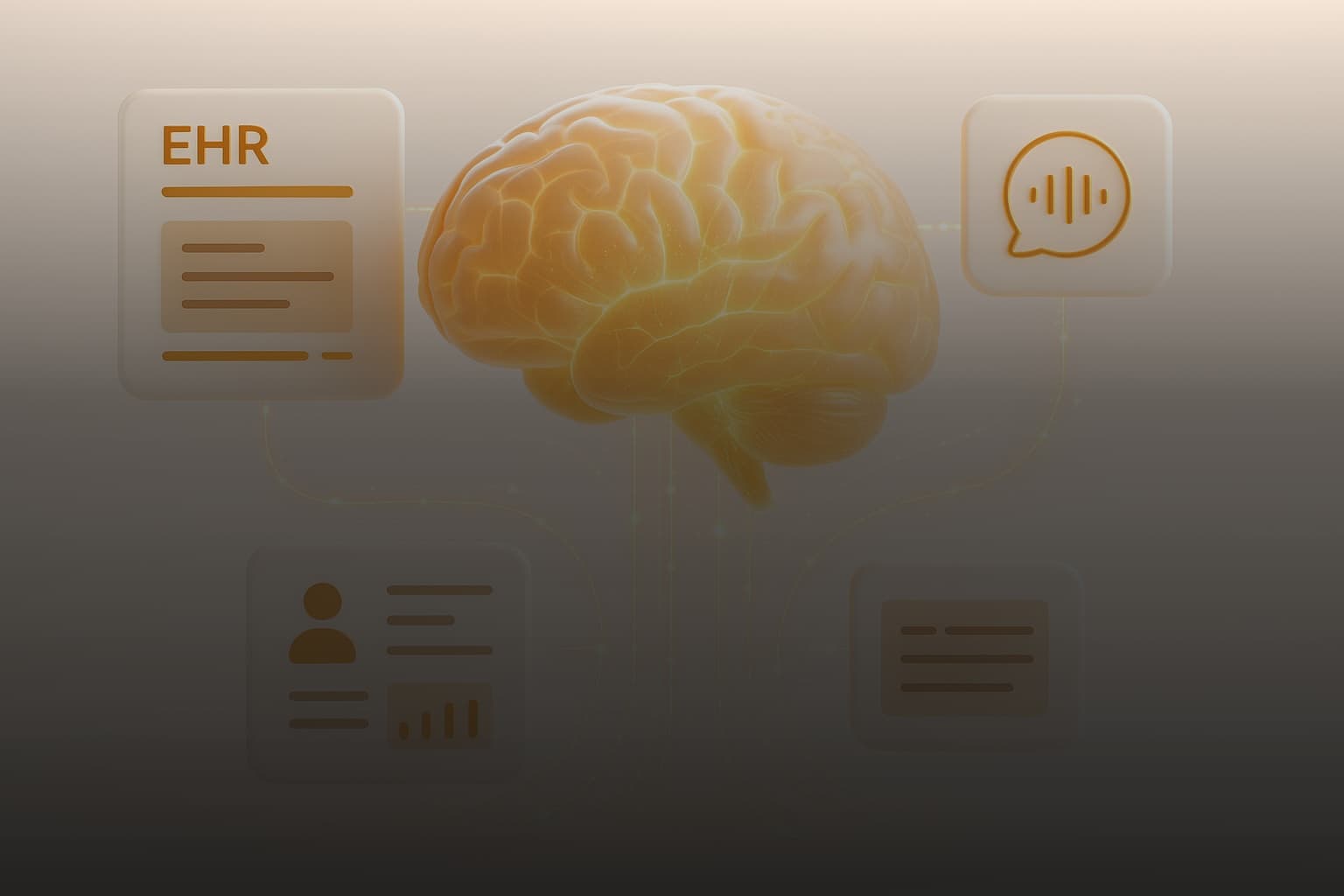
Clinical AI Tools: Real-World Impact & Benchmarks in 2026
Clinical AI tools are finally delivering measurable results that matter to physicians. After years of hype around diagnostic accuracy and benchmark performance, the real revolution is happening in doc...
Clinical AI tools are finally delivering measurable results that matter to physicians. After years of hype around diagnostic accuracy and benchmark performance, the real revolution is happening in documentation suites and workflow automation that give doctors their time back. Kaiser Permanente saved 15,791 hours of physician documentation time across 2.5 million patient encounters using AI scribes, and that's just one health system. The shift from theoretical promise to quantifiable impact marks the maturity of clinical AI in 2026.
Clinical AI Tools Are Redefining Medical Benchmarks in 2026
The conversation has moved from "Can AI match radiologist accuracy?" to "How many hours did this tool save our clinicians this month?" That's not a retreat from ambition. It's a recognition that physician burnout and administrative overload are the actual crisis, and the AI tools gaining traction are the ones solving that problem first.
Microsoft's Nuance DAX Copilot is now integrated into over 150 health systems because it addresses documentation burden, not because it topped some academic leaderboard. The digital health technology market exceeds $300 billion in 2026, and the money is flowing toward solutions that make the workday feel lighter, not just the ones with impressive benchmark scores. Healthcare AI spending nearly tripled to $1.4 billion in 2025, creating eight healthcare AI unicorns focused on workflow and administrative efficiency rather than pure diagnostic performance.
The pattern is clear: technologies focused on workflow integration and quantifiable time savings achieve adoption faster than those optimized purely for benchmark performance. Clinical AI has moved from research novelty to infrastructure necessity.
Why Traditional AI Benchmarks Miss What Clinicians Actually Need
Academic benchmarks measure what's easy to quantify, not what's valuable in practice. A model that achieves 98% accuracy on a curated dataset might fail completely when integrated into a chaotic ED workflow with incomplete patient histories and time-pressured decision-making. The gap between laboratory performance and real-world utility has become the defining challenge of clinical AI deployment.
Traditional metrics like sensitivity, specificity, and AUC tell you nothing about whether a tool will actually get used. They don't measure workflow friction, alert fatigue, or the cognitive load of switching between systems. A diagnostic AI that requires three extra clicks and a context switch will sit unused, no matter how accurate it is on paper.
Research Performance vs. Real-World Clinical Utility
The disconnect starts with the data. Benchmark datasets are clean, labeled, and representative of conditions the model was trained to recognize. Real clinical data is messy, incomplete, and full of edge cases. A model trained on high-quality imaging from academic medical centers struggles with the grainy scans from rural facilities or the unusual presentations that don't fit textbook patterns.
Implementation context matters more than raw performance. An AI tool that integrates seamlessly into existing EHR workflows and requires minimal training will outperform a technically superior solution that demands workflow redesign. Physicians don't have time to learn new systems or toggle between interfaces. The best systems disappear into workflow, making existing infrastructure breathe again.
The Administrative Burden Crisis Driving AI Adoption
Physicians spend nearly two hours on documentation and administrative tasks for every hour of direct patient care. That ratio has driven burnout rates above 50% in many specialties, with documentation burden cited as the primary culprit. The problem isn't diagnostic complexity or clinical decision-making. It's the endless clicking, typing, and box-checking required to satisfy billing, compliance, and medicolegal requirements.
This is where AI is making its biggest impact in 2026. Ambient listening tools and AI scribes are targeting the documentation crisis directly, and the results are measurable. Physicians report saving 1-2 hours of documentation time per day when using AI scribes, time that can be redirected to patient care or simply reclaimed from the 12-hour workdays that have become normalized in medicine.
The near-term productivity lift is coming less from diagnosis and more from documentation and workflow improvements. That's not a limitation. It's a recognition of where the pain is most acute and where AI can deliver immediate, quantifiable value.
How Ambient Listening and AI Scribes Are Saving Physicians 1-2 Hours Daily
Ambient clinical intelligence tools listen to patient encounters, extract relevant information, and generate structured documentation without requiring physicians to type or dictate. The technology has matured rapidly, moving from experimental pilots to widespread deployment across major health systems. The value proposition is simple: reclaim the hours lost to documentation and give them back to patient care or personal life.
The time savings are substantial and consistent across specialties. Primary care physicians report the highest gains, with 1-2 hours saved daily on average. Specialists see similar benefits, though the documentation patterns vary. The real advance is when the workday feels lighter and the care feels closer, not when a benchmark score ticks up by a few percentage points.
The Technology Behind Clinical Ambient Intelligence
These tools use advanced speech recognition combined with natural language processing to capture patient-physician conversations in real time. The AI identifies clinical concepts, extracts relevant details, and maps them to structured fields in the EHR. The physician reviews and approves the generated note, making corrections as needed, but the bulk of the typing and clicking is eliminated.
The models are trained on millions of clinical conversations, learning the patterns of medical dialogue across specialties and settings. They handle medical terminology, understand context, and can distinguish between relevant clinical information and casual conversation. The technology works in noisy environments, with multiple speakers, and across accents and speech patterns.
Integration with EHR systems is critical. The best ambient tools pull patient history and context from the chart, use that information to inform the documentation, and then write back to the appropriate fields without requiring manual data entry. The physician never leaves their normal workflow. The AI simply makes it faster and less tedious.
Kaiser Permanente's 15,791 Hours Saved: A Real-World Case Study
Kaiser Permanente's deployment of AI scribes across 2.5 million patient encounters provides hard data on the impact of ambient documentation tools. The health system saved 15,791 hours of physician documentation time, time that would otherwise have been spent typing notes after hours or during the brief windows between patients. That's time returned to patient care, teaching, or simply reducing the burnout that comes from endless administrative tasks.
The study tracked documentation time before and after AI scribe implementation, measuring actual time savings rather than relying on physician self-reports. The results held across different specialties and practice settings, suggesting the technology is robust enough for broad deployment. Physicians reported higher satisfaction and lower documentation burden, with no increase in documentation errors or compliance issues.
The financial case is straightforward. If a physician saves 1.5 hours per day and that time can be redirected to patient care, the productivity gain pays for the technology many times over. But the real value might be in retention and burnout prevention. Physicians who feel less overwhelmed by administrative tasks are more likely to stay in practice and less likely to reduce their clinical hours.
Microsoft Nuance DAX Copilot and the 150+ Health System Rollout
Microsoft's Nuance DAX Copilot has become the market leader in ambient clinical documentation, integrated into over 150 health systems as of mid-2026. The tool leverages Microsoft's Azure cloud infrastructure and Nuance's decades of experience in medical speech recognition to deliver a solution that works at scale. The integration with Epic, Cerner (now Oracle Health), and other major EHR platforms is seamless, making adoption easier for large health systems.
DAX Copilot generates clinical notes in real time during patient encounters, pulling relevant information from the patient's chart and structuring the documentation according to the physician's preferences and specialty-specific templates. Physicians can review and edit the note immediately or approve it with minimal changes. The system learns from corrections, improving accuracy over time for individual users.
The 150+ health system rollout represents a validation of the technology's readiness for production use at scale. These aren't pilot programs or limited trials. They're full deployments across thousands of physicians, handling millions of patient encounters annually. The adoption curve is steep, and competitors are racing to match the functionality and integration depth that DAX Copilot has achieved.
EHR Giants Make AI Native: Epic, athenahealth, and Oracle's 2026 Integration Push
The major EHR vendors have moved AI from optional add-on to core platform functionality in 2026. Epic, athenahealth, and Oracle Health (formerly Cerner) are all embedding AI-powered documentation, clinical decision support, and workflow automation directly into their systems. This shift eliminates the integration friction that has slowed AI adoption and signals that clinical AI is now considered essential infrastructure rather than experimental innovation.
Native integration means physicians don't need to learn new tools or switch between systems. The AI features appear within the familiar EHR interface, using existing workflows and data structures. This reduces training time, minimizes resistance to adoption, and ensures that AI tools actually get used rather than ignored.
Why Seamless Workflow Integration Matters More Than Accuracy Scores
A technically superior AI tool that requires workflow disruption will lose to a less accurate solution that fits naturally into existing processes. Physicians are time-constrained and cognitively loaded. They won't tolerate additional steps, context switches, or learning curves unless the benefit is overwhelming and immediate.
The EHR vendors understand this reality. By making AI native to the platform, they eliminate the adoption barrier that has killed countless promising AI tools. The physician doesn't decide whether to use the AI. It's simply part of the system, available when needed, invisible when not. This approach has driven adoption rates far higher than standalone AI products ever achieved.
The frame that makes most sense of where clinical AI sits in 2026 is infrastructure, not innovation. It's becoming part of the plumbing, the background systems that make healthcare delivery possible. That's not a criticism. Infrastructure is how technology achieves widespread impact. The exciting demos and benchmark-topping models matter less than the boring, reliable tools that save time every single day.
The $300 Billion Question: Separating Hype from Healthcare Value
The digital health technology market exceeds $300 billion in 2026, with AI representing a rapidly growing segment. But market size doesn't equal value delivered. Much of the investment is still chasing potential rather than proven outcomes, and the gap between hype and reality remains substantial in many areas of healthcare AI.
The money is flowing toward documentation and workflow tools because those solutions have demonstrated clear ROI and rapid adoption. Diagnostic AI and clinical decision support are still important, but they face longer validation timelines, higher regulatory hurdles, and more complex integration requirements. The near-term winners are the companies solving the problems physicians feel most acutely, not the ones with the most impressive technical capabilities.
Eight Healthcare AI Unicorns and What They're Actually Solving
Healthcare AI spending nearly tripled to $1.4 billion in 2025, creating eight healthcare AI unicorns with valuations exceeding $1 billion each. These companies aren't building general-purpose medical AI or trying to replace physicians. They're focused on specific, high-value problems: documentation automation, prior authorization processing, medical coding, patient scheduling, and clinical workflow optimization.
The unicorn status reflects investor confidence that these problems are large enough and the solutions are mature enough to build billion-dollar businesses. But it also reflects the reality that healthcare is a massive, complex market where even narrow solutions can generate substantial revenue if they solve real pain points. The companies succeeding are the ones that understand healthcare operations, not just AI technology.
The spending surge has also funded companies working on more ambitious problems like drug discovery, personalized treatment planning, and diagnostic imaging analysis. These efforts have longer timelines and less certain outcomes, but the potential impact is larger. The market is big enough to support both the near-term workflow solutions and the longer-term clinical applications.
Best AI Tools for Clinical Documentation and Workflow Optimization
Physicians looking to reduce documentation burden have several proven options in 2026. Nuance DAX Copilot leads the market with the deepest EHR integration and the largest deployment base, making it the safe choice for most practices. The tool works across specialties and has demonstrated consistent time savings in real-world use.
Smaller practices and individual physicians might prefer solutions with simpler implementation and lower upfront costs. The key evaluation criteria are EHR compatibility, accuracy for your specialty, ease of use, and vendor support. Don't get distracted by benchmark scores or feature lists. Focus on whether the tool will actually save you time in your specific workflow.
The best approach is to pilot a tool with a small group of physicians before committing to a full deployment. Measure actual time savings, documentation quality, and physician satisfaction. If the results are compelling, scale up. If not, try a different solution. The market is competitive enough that you have real choices, and the technology is mature enough that you should expect immediate, measurable benefits.
The 22% Error Rate Problem: Why AI Observability Tools Are Critical
AI-generated clinical documentation can contain errors in up to 22% of cases, according to recent studies of deployed systems. These aren't catastrophic failures. They're subtle inaccuracies, omissions, or misinterpretations that could lead to incorrect billing, missed diagnoses, or suboptimal treatment decisions if not caught and corrected. The error rate highlights why AI observability and quality monitoring are critical for safe clinical AI deployment.
Physicians must review AI-generated notes before signing them, but that review needs to be efficient and focused on high-risk areas. AI observability tools help by flagging likely errors, tracking accuracy over time, and identifying patterns that might indicate systematic problems. These tools are becoming essential infrastructure for any organization deploying clinical AI at scale.
PHI Redaction and Quality Metrics for Clinical AI Deployment
Protected health information (PHI) security is non-negotiable in clinical AI systems. Tools must handle patient data in compliance with HIPAA and other privacy regulations, with robust encryption, access controls, and audit logging. PHI redaction capabilities are essential for any system that shares data with external vendors or uses cloud-based processing.
Quality metrics for clinical AI go beyond simple accuracy scores. They need to track error types, identify high-risk cases, measure physician correction rates, and monitor for drift over time as models encounter new patterns or edge cases. The best systems provide real-time dashboards showing quality metrics by physician, specialty, and encounter type, allowing administrators to identify and address problems quickly.
Deployment teams need to establish clear quality thresholds and monitoring processes before rolling out AI tools broadly. What error rate is acceptable? How quickly must errors be detected and corrected? Who is responsible for ongoing quality assurance? These aren't technical questions. They're governance and safety questions that require input from clinical leadership, compliance, and risk management.
Regulatory Frameworks Catching Up to Clinical AI Reality
The FDA and CMS are still developing comprehensive regulatory frameworks for clinical AI tools in 2026. Current guidance focuses on high-risk applications like diagnostic imaging and clinical decision support, with lighter oversight for documentation and workflow tools. But the regulatory landscape is evolving rapidly as AI deployment accelerates and safety concerns emerge.
The FDA's approach distinguishes between AI tools that make or influence clinical decisions (higher risk, more oversight) and those that support administrative or workflow functions (lower risk, less oversight). This framework makes sense, but the line between clinical and administrative AI is blurring as tools become more sophisticated and integrated. A documentation tool that summarizes patient history and suggests diagnoses crosses into clinical decision support territory.
Healthcare organizations can't wait for perfect regulatory clarity before deploying AI tools. The competitive pressure and physician burnout crisis are too acute. But they need to implement strong internal governance, quality monitoring, and risk management processes to ensure patient safety and regulatory compliance. The organizations that get this right will have a significant advantage as regulations tighten.
Choosing the Right Clinical AI Tools for Your Practice in 2026
The decision framework for clinical AI tools starts with a clear understanding of your specific pain points and workflow constraints. Don't buy technology because it's impressive or because competitors are using it. Buy it because it solves a problem you've quantified and because you have a realistic plan for implementation and adoption.
Documentation burden is the most common pain point and the area where AI tools have the strongest track record. If physicians in your organization are spending hours after clinic typing notes or if burnout and turnover are high, ambient documentation tools should be your first priority. The ROI is clear and the adoption curve is well understood.
Workflow Integration Checklist: What to Demand from Vendors
Start with EHR compatibility. The tool must integrate natively with your EHR system, not require physicians to toggle between applications or manually transfer data. Ask for specific details about the integration: What data flows automatically? Where do physicians need to intervene? How many extra clicks does the workflow require?
Demand proof of real-world performance, not just benchmark scores. Ask for case studies from similar organizations, with specific data on time savings, physician satisfaction, and error rates. Talk to reference customers about their implementation experience, ongoing support, and any unexpected challenges.
Evaluate the vendor's financial stability and product roadmap. Clinical AI is a rapidly evolving field, and you need a vendor that will be around in five years and will continue investing in product development and support. Ask about their customer base, revenue growth, and plans for future features. Be wary of startups with impressive demos but limited deployment experience.
Top-Rated AI Solutions for Different Clinical Specialties
Primary care physicians benefit most from general-purpose ambient documentation tools that handle the wide variety of conditions and visit types common in family medicine and internal medicine. Nuance DAX Copilot and similar solutions work well across primary care settings, with templates and workflows optimized for common visit patterns.
Specialists have more specific needs. Radiologists need AI tools that integrate with PACS systems and provide decision support for image interpretation. Pathologists need digital pathology platforms with AI-assisted diagnosis. Cardiologists need tools that analyze ECGs and echocardiograms. The best approach is to identify vendors with deep expertise in your specialty and proven deployments in similar practices.
Mental health providers are seeing rapid adoption of AI scribes designed specifically for therapy and counseling sessions. These tools handle the unique documentation requirements of behavioral health, including treatment plans, progress notes, and outcome measures. They also address the privacy and sensitivity concerns that are particularly acute in mental health settings.
Taking Action: Implementing Clinical AI That Actually Improves Patient Care
Start small and measure everything. Pilot a clinical AI tool with a small group of enthusiastic physicians who are willing to provide detailed feedback. Track time savings, documentation quality, physician satisfaction, and any workflow disruptions. Use that data to refine the implementation before scaling to the full organization.
Invest in training and change management. Even the most intuitive AI tools require some learning curve, and physicians need to understand both how to use the technology and why it's being implemented. Frame the AI tool as a solution to their pain points, not as a top-down mandate. Get physician champions involved in the rollout and use their positive experiences to drive broader adoption.
Don't expect perfection. AI tools will make errors, workflows will need adjustment, and some physicians will resist adoption. Plan for these challenges and have processes in place to address them quickly. The goal isn't to deploy flawless technology. It's to deploy technology that makes physicians' lives measurably better, even if it requires ongoing refinement and support.
The organizations succeeding with clinical AI in 2026 are the ones treating it as infrastructure rather than innovation. They're focused on workflow integration, measurable outcomes, and continuous improvement rather than chasing the latest benchmarks or most impressive demos. That approach might be less exciting, but it's the one that actually improves patient care and makes physicians' workdays feel lighter.
Get the newsletter
One sharp idea every Sunday.
No fluff. No sales pitches. Just the best of what we publish, hand-picked.
Continue Reading
Related Articles

Top 10 AI Video Generators: 2026's Ultimate Guide
The AI video generation market hit $1.2 billion in valuation by Q1 2026, growing 340% year-over-year. What used to require a production crew, expensive cameras, and weeks of editing now happens in min...

Vibe Coding: 5 Critical Facts About AI Development Tools
You're building software in 2026 the same way you did in 2015. That's a problem. While you're meticulously typing out boilerplate, a founder with zero programming experience just shipped an MVP in 72…

How To Build a Personal AI Assistant Without Coding in 5 Days
You can build a functioning personal AI assistant in 5 days without writing a single line of code. No developer background required. No expensive consultants. Just you, a no-code platform, and a clear…